Crimson Pearl Set
Crimson Pearl Set
Hurry up! Only 1 item is in stock
Premium Stones
Globally Sourced
Handmade Jewellery
Unique Designs
Couldn't load pickup availability
Returns
Returns
If you're unhappy with your purchase, we'll find a solution for you. Most of our products can be returned within 7 days. Returns will be refunded to the original payment method or as a store credit. We do our best to make you comfortable, because let's face it, you're the best.
Jewelry Care Guide
Jewelry Care Guide
To keep your GAIA gold-plated jewelry shining and prevent natural color change (oxidation), follow these simple rules:
- Last On, First Off: Put your jewelry on after makeup, perfume, and lotion have dried. Take it off first when you get home.
- Keep It Dry: Always remove your pieces before showering, swimming, or intense workouts.
- Avoid Chemicals: Direct contact with harsh chemicals, perfumes, or saltwater can strip the gold layer and cause dullness.
- Store Safely: Keep your pieces in the GAIA airtight pouch or a jewelry box to protect them from moisture.
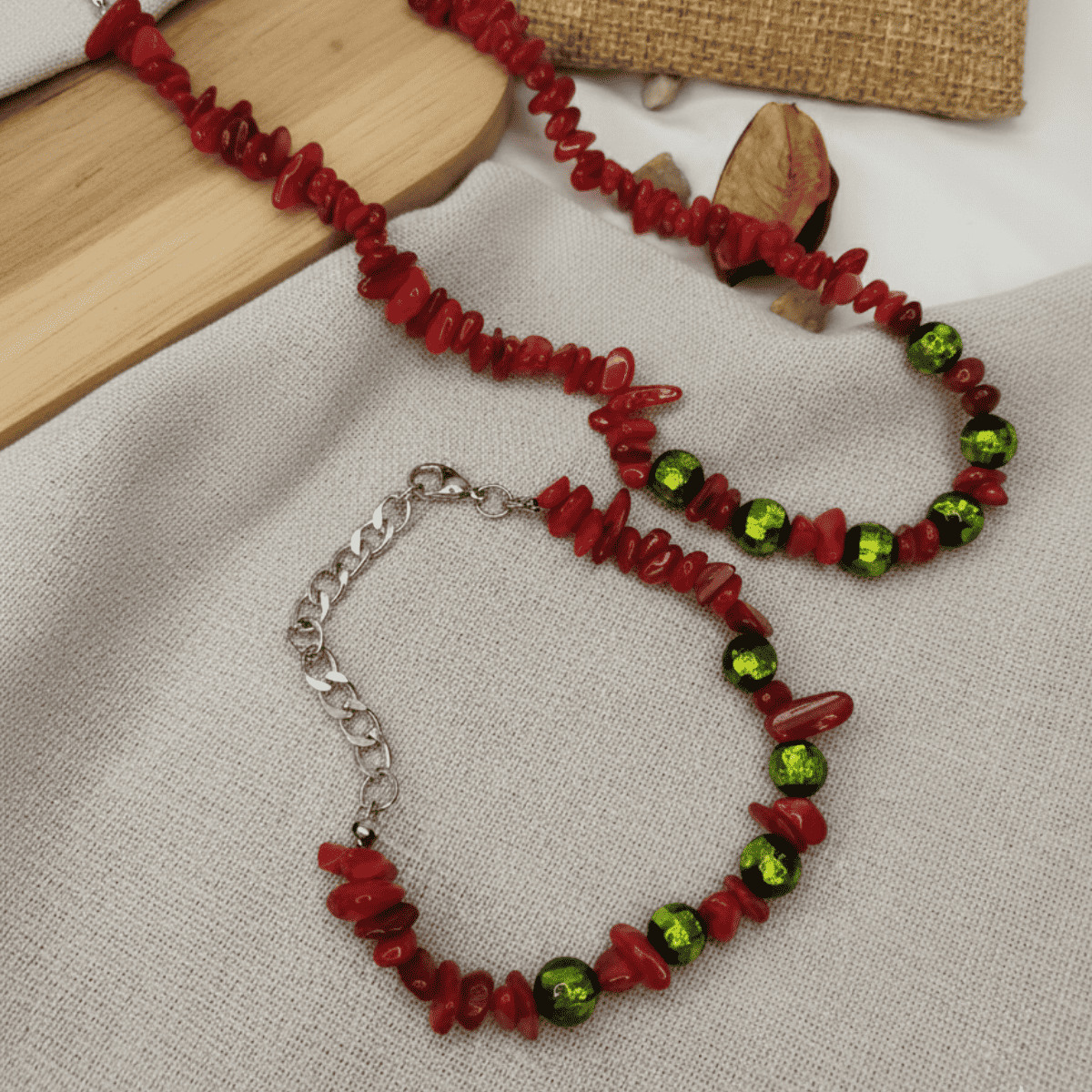
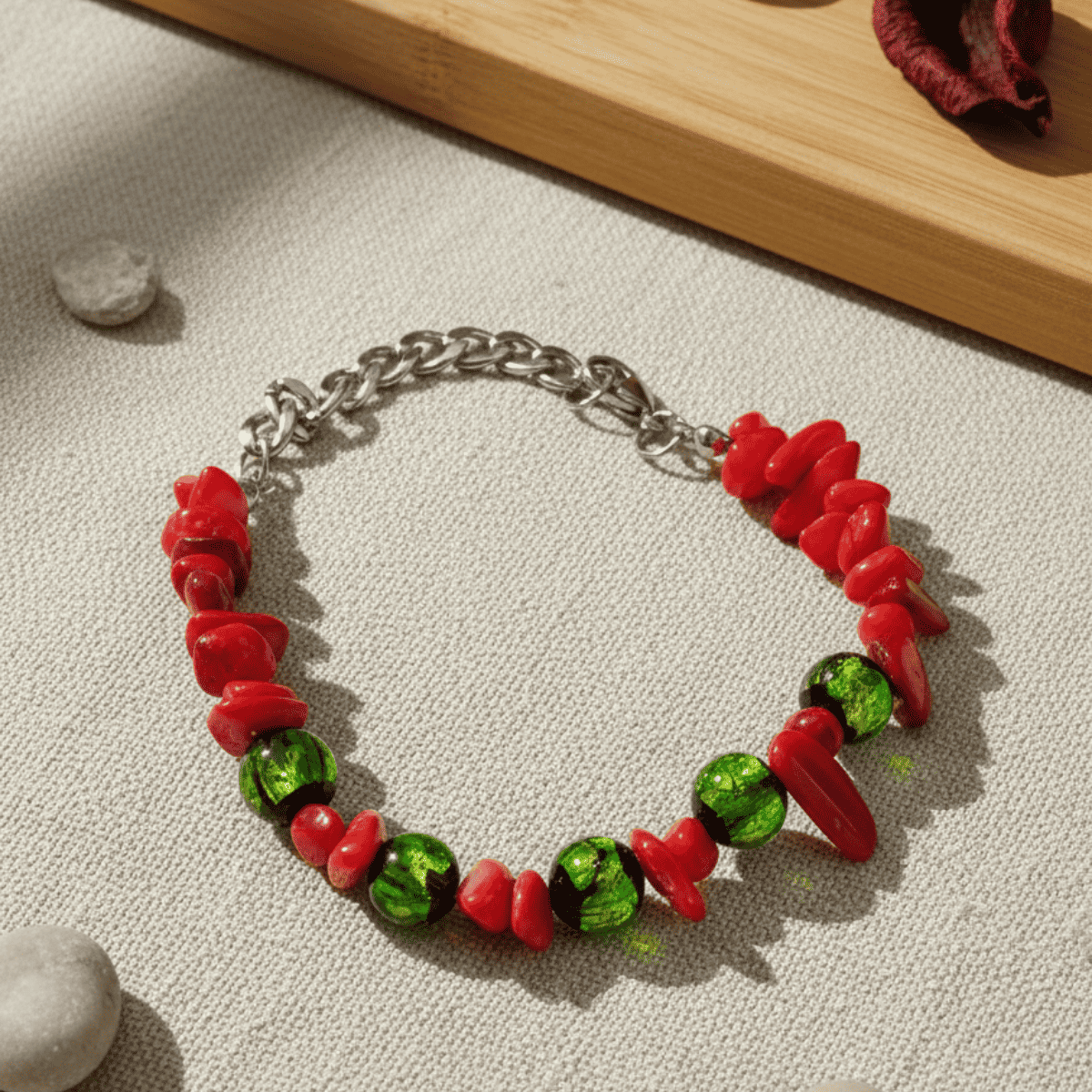
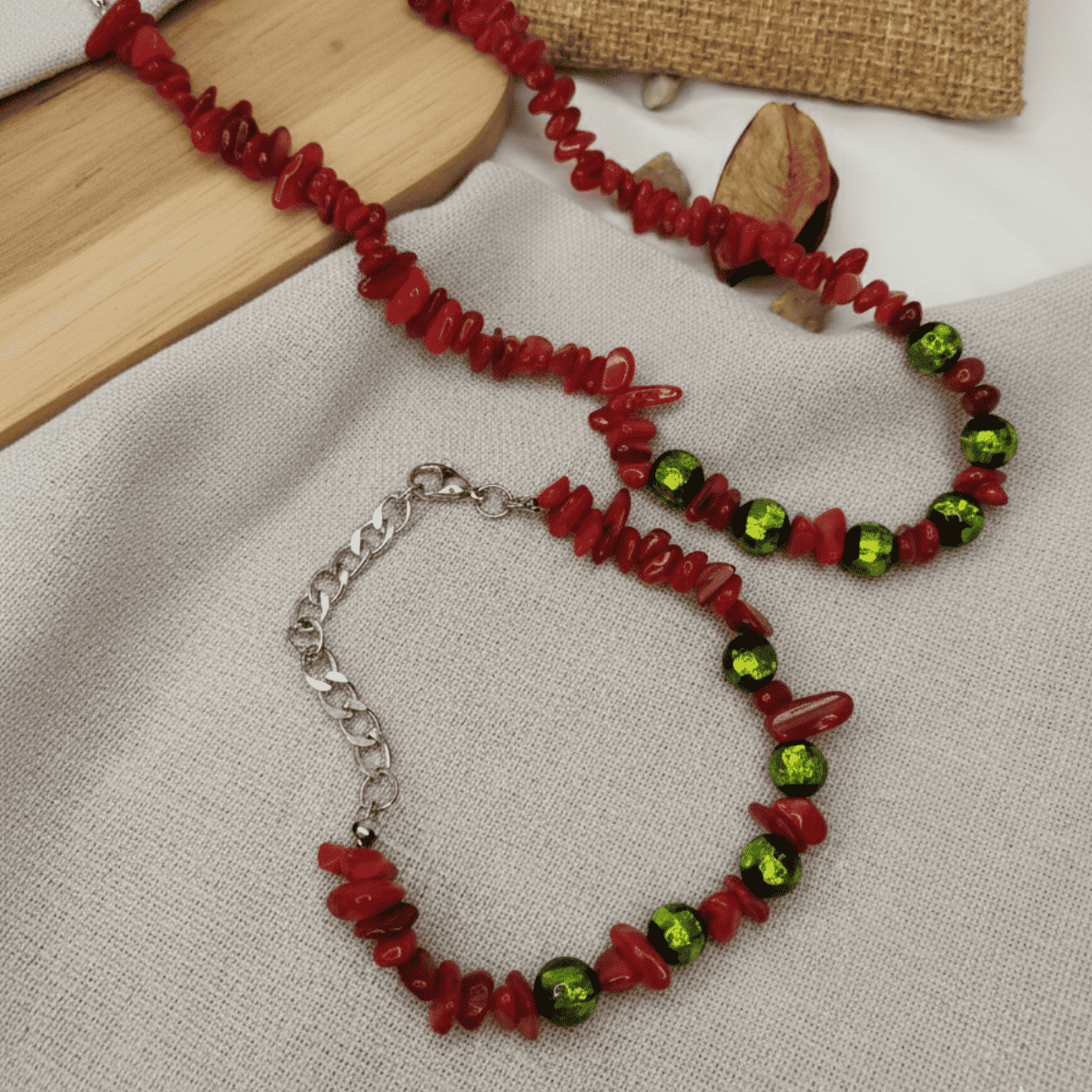
Deep crimson mother of pearl — each chip irregular, unrepeated, carrying the memory of the sea — meets the cold brilliance of green foil glass in a composition that refuses subtlety. The necklace and its matching bracelet move as a single statement, bound by a stainless steel clasp of precise weight. Conceived once and never repeated — a set that belongs entirely to its collector.
- Elements: Red-dyed mother of pearl chips, green foil glass beads, stainless steel clasp & extension chain
- Size: Adjustable chain length
- Rarity: One piece
- Associations: Aries, Scorpio (Mother of Pearl)
Express your natural beauty with GAIA pieces, handcrafted with care in Egypt.
Mother of pearl has been harvested and shaped into personal ornament since antiquity — from archaeological sites across the ancient Near East and Mediterranean dating to over 4,000 years ago. Its iridescent surface made it among the most sought-after organic materials in ancient trade, carried across sea routes and shaped by hand into beads, inlays, and amulets (Dubin, L.S., The History of Beads, Thames & Hudson, 2009).


Bundle deals