Lion Ring
Lion Ring
Hurry up! Only 3 items are in stock.
Premium Stones
Globally Sourced
Handmade Jewellery
Unique Designs
Couldn't load pickup availability
Returns
Returns
If you're unhappy with your purchase, we'll find a solution for you. Most of our products can be returned within 7 days. Returns will be refunded to the original payment method or as a store credit. We do our best to make you comfortable, because let's face it, you're the best.
Jewelry Care Guide
Jewelry Care Guide
To keep your GAIA gold-plated jewelry shining and prevent natural color change (oxidation), follow these simple rules:
- Last On, First Off: Put your jewelry on after makeup, perfume, and lotion have dried. Take it off first when you get home.
- Keep It Dry: Always remove your pieces before showering, swimming, or intense workouts.
- Avoid Chemicals: Direct contact with harsh chemicals, perfumes, or saltwater can strip the gold layer and cause dullness.
- Store Safely: Keep your pieces in the GAIA airtight pouch or a jewelry box to protect them from moisture.
Cut from the same stone as the symbol.
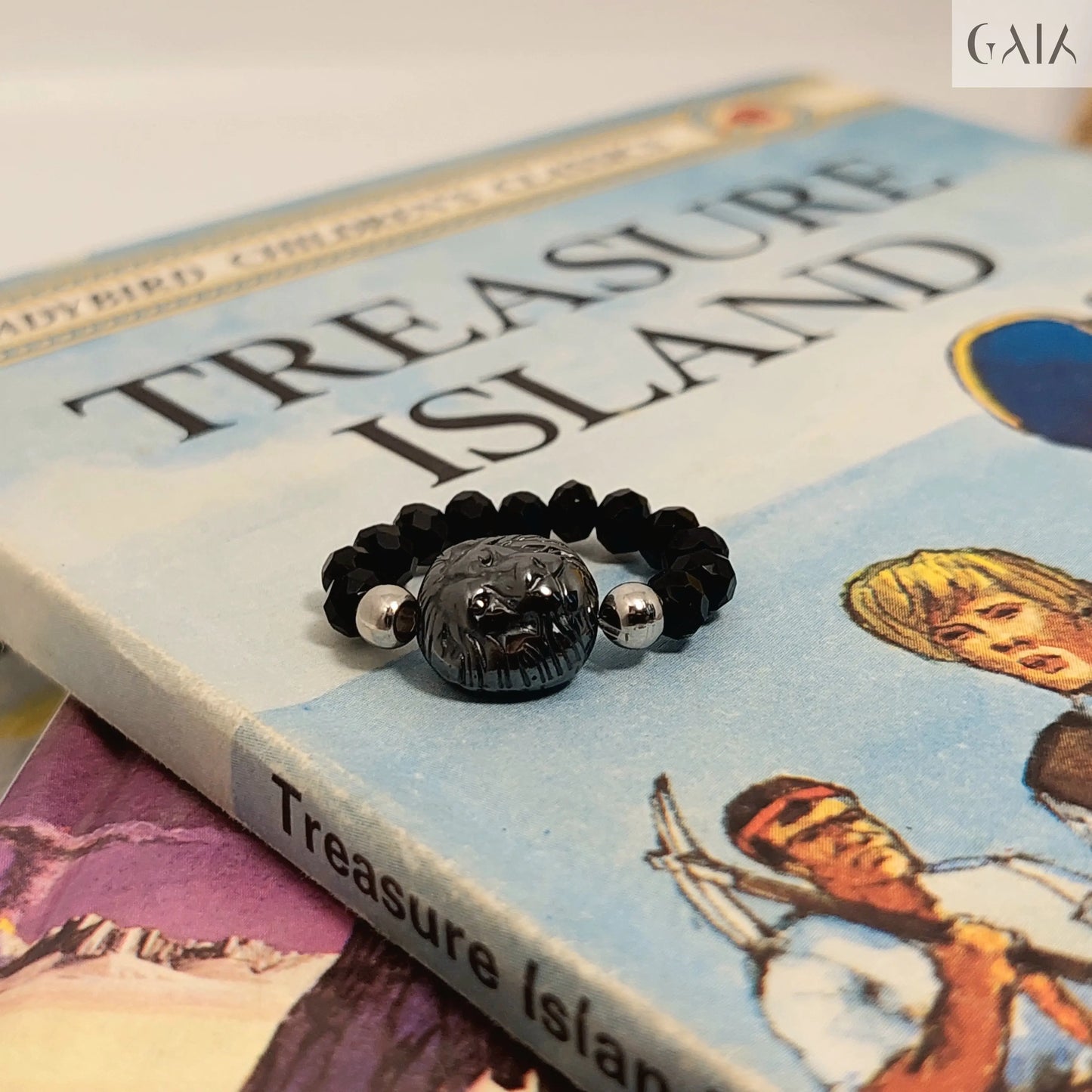
A beaded ring built on faceted black crystal, with a carved Hematite lion at the center. The lion sits flush against the band — heavy, detailed, unmistakable. Silver-plated accents frame it on each side. Size 7, hand-finished for daily wear.
- Elements: Black crystal beads, natural Hematite carved lion charm, silver-plated metal accents, elastic core
- Size: 7
- Rarity: Limited seasonal release.
- Associations: Aries (Hematite) | Aquarius (Hematite)
Express your natural beauty with GAIA pieces, handcrafted with care in Egypt.
Hematite was one of the first stones used by human hands — not as ornament, but as pigment. The red ochre found in prehistoric burial sites across Africa and Europe is oxidized Hematite, ground and applied with deliberate intention. By the time of ancient Egypt, the stone had moved from pigment to amulet: Hematite scarabs and carved figures appear in tombs of the New Kingdom, placed among the dead as objects of protection. Roman soldiers carried it into battle for the same reason. The name comes from the Greek haima, blood — a reference to the red streak the stone leaves when cut. — Kunz, G.F., The Curious Lore of Precious Stones, J.B. Lippincott, 1913



Bundle deals