Bloom Ring
Bloom Ring
Hurry up! Only 3 items are in stock.
Premium Stones
Globally Sourced
Handmade Jewellery
Unique Designs
Couldn't load pickup availability
Returns
Returns
If you're unhappy with your purchase, we'll find a solution for you. Most of our products can be returned within 7 days. Returns will be refunded to the original payment method or as a store credit. We do our best to make you comfortable, because let's face it, you're the best.
Jewelry Care Guide
Jewelry Care Guide
To keep your GAIA gold-plated jewelry shining and prevent natural color change (oxidation), follow these simple rules:
- Last On, First Off: Put your jewelry on after makeup, perfume, and lotion have dried. Take it off first when you get home.
- Keep It Dry: Always remove your pieces before showering, swimming, or intense workouts.
- Avoid Chemicals: Direct contact with harsh chemicals, perfumes, or saltwater can strip the gold layer and cause dullness.
- Store Safely: Keep your pieces in the GAIA airtight pouch or a jewelry box to protect them from moisture.
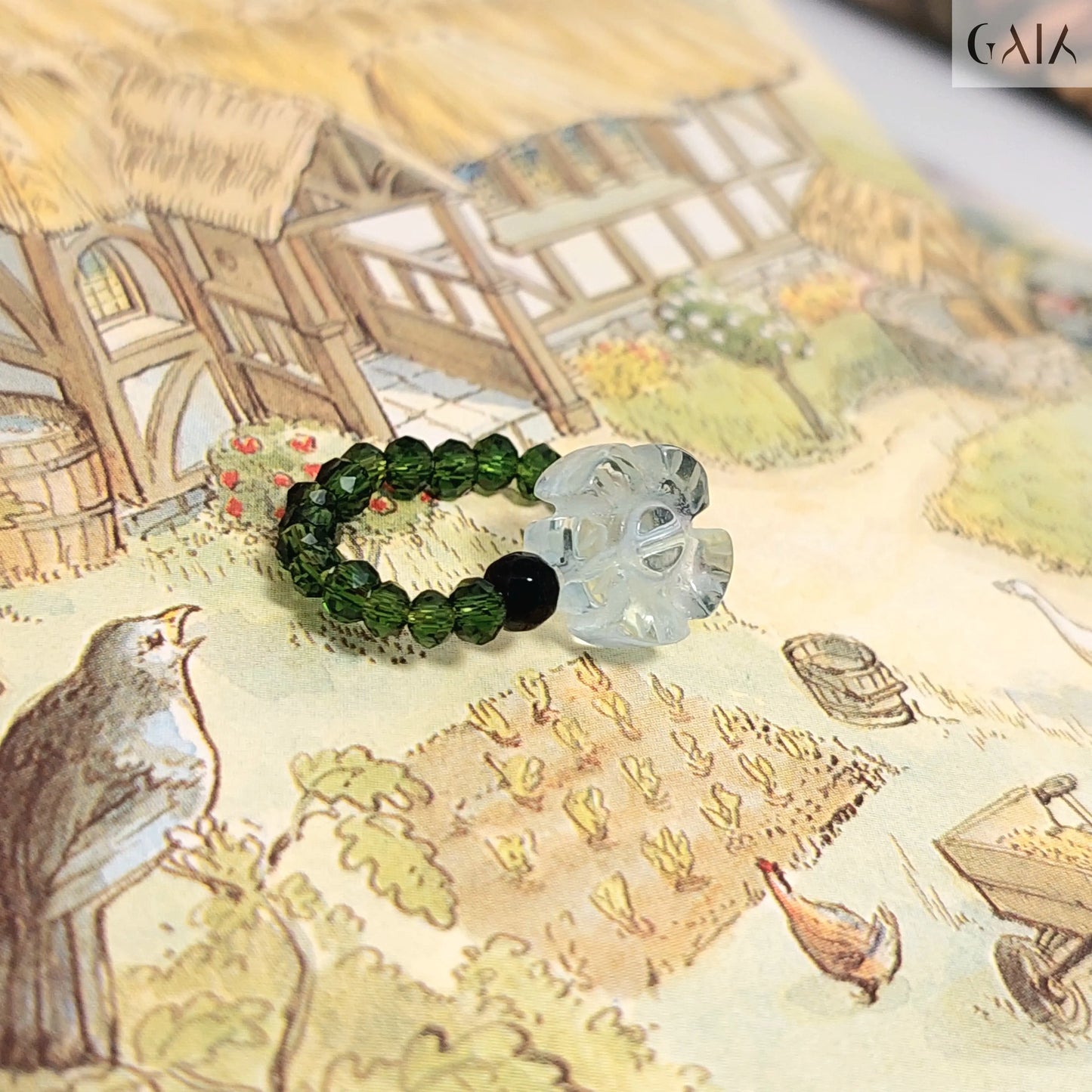
Green band. Clear center.
A beaded ring built on faceted green crystal, with a single carved clear crystal flower at the front. The flower is detailed and transparent — its petals catch light differently depending on the angle. A single black bead sits at the base as a quiet accent. Size 7, hand-finished for daily wear.
- Elements: Green crystal beads, carved clear crystal flower charm, black crystal accent bead, elastic core
- Size: 7
- Rarity: Limited seasonal release.
Express your natural beauty with GAIA pieces, handcrafted with care in Egypt.
The flower as a motif in jewelry predates written history. Excavations at ancient Egyptian sites have recovered floral collar pieces and carved stone flowers used as amulets, with lotus and papyrus forms appearing consistently across dynastic periods. In ancient Greece, floral forms were cast in gold and pressed into funerary wreaths — objects meant to carry the appearance of life into death. The carved flower in decorative arts has never fully left — it reappears in every period that values ornament over utility. — Aldred, C., Jewels of the Pharaohs, Thames & Hudson, 1971



Bundle deals