Still Water Bracelet
Still Water Bracelet
Hurry up! Only 8 items are in stock.
Premium Stones
Globally Sourced
Handmade Jewellery
Unique Designs
Couldn't load pickup availability
Returns
Returns
If you're unhappy with your purchase, we'll find a solution for you. Most of our products can be returned within 7 days. Returns will be refunded to the original payment method or as a store credit. We do our best to make you comfortable, because let's face it, you're the best.
Jewelry Care Guide
Jewelry Care Guide
To keep your GAIA gold-plated jewelry shining and prevent natural color change (oxidation), follow these simple rules:
- Last On, First Off: Put your jewelry on after makeup, perfume, and lotion have dried. Take it off first when you get home.
- Keep It Dry: Always remove your pieces before showering, swimming, or intense workouts.
- Avoid Chemicals: Direct contact with harsh chemicals, perfumes, or saltwater can strip the gold layer and cause dullness.
- Store Safely: Keep your pieces in the GAIA airtight pouch or a jewelry box to protect them from moisture.
Blue, stilled.
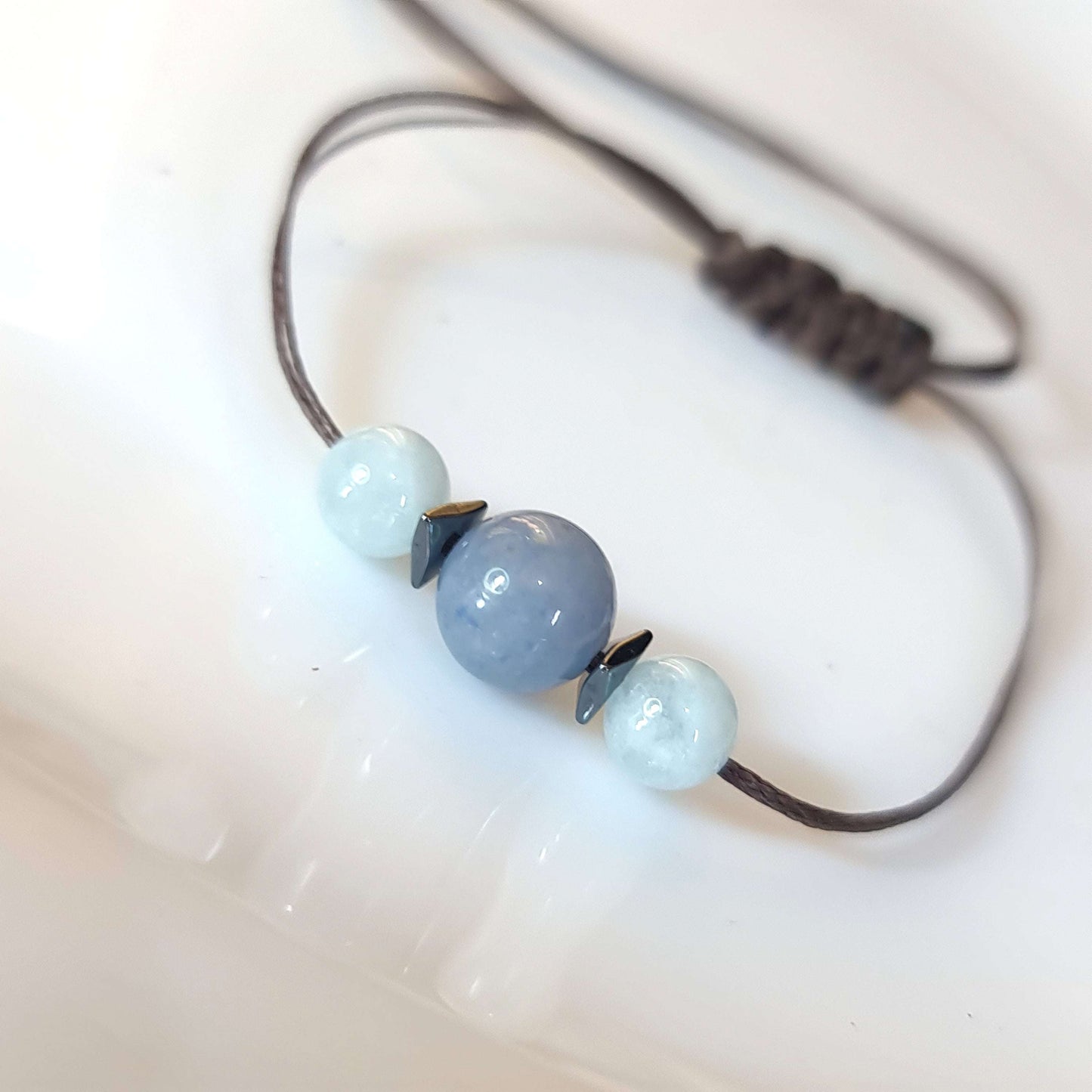
A single Angelite sphere sits at the center — matte, dense, and deeply blue-grey. Two Aquamarine beads flank it on either side, their pale translucent blue catching light differently against the darker stone. Small silver Hematite discs separate each stone, and the whole piece runs on a dark leather cord with a sliding closure for an adjustable fit.
- Elements: Angelite, Aquamarine, Hematite discs, leather cord.
- Size: Adjustable slide-closure fit.
- Rarity: Limited seasonal release.
- Associations: Aquarius (Angelite, Hematite) | Pisces (Aquamarine)
Express your natural beauty with GAIA pieces, handcrafted with care in Egypt.
Aquamarine was carried by Roman sailors as a talisman against storms at sea — the stone's pale blue-green color was believed to mirror the shallow coastal waters of the Mediterranean, and its presence on board was considered a sign of safe passage. Specimens were documented in trade routes stretching from the mines of the Ural Mountains to the ports of Alexandria. (Kunz, G.F., The Curious Lore of Precious Stones, J.B. Lippincott, 1913)



Bundle deals