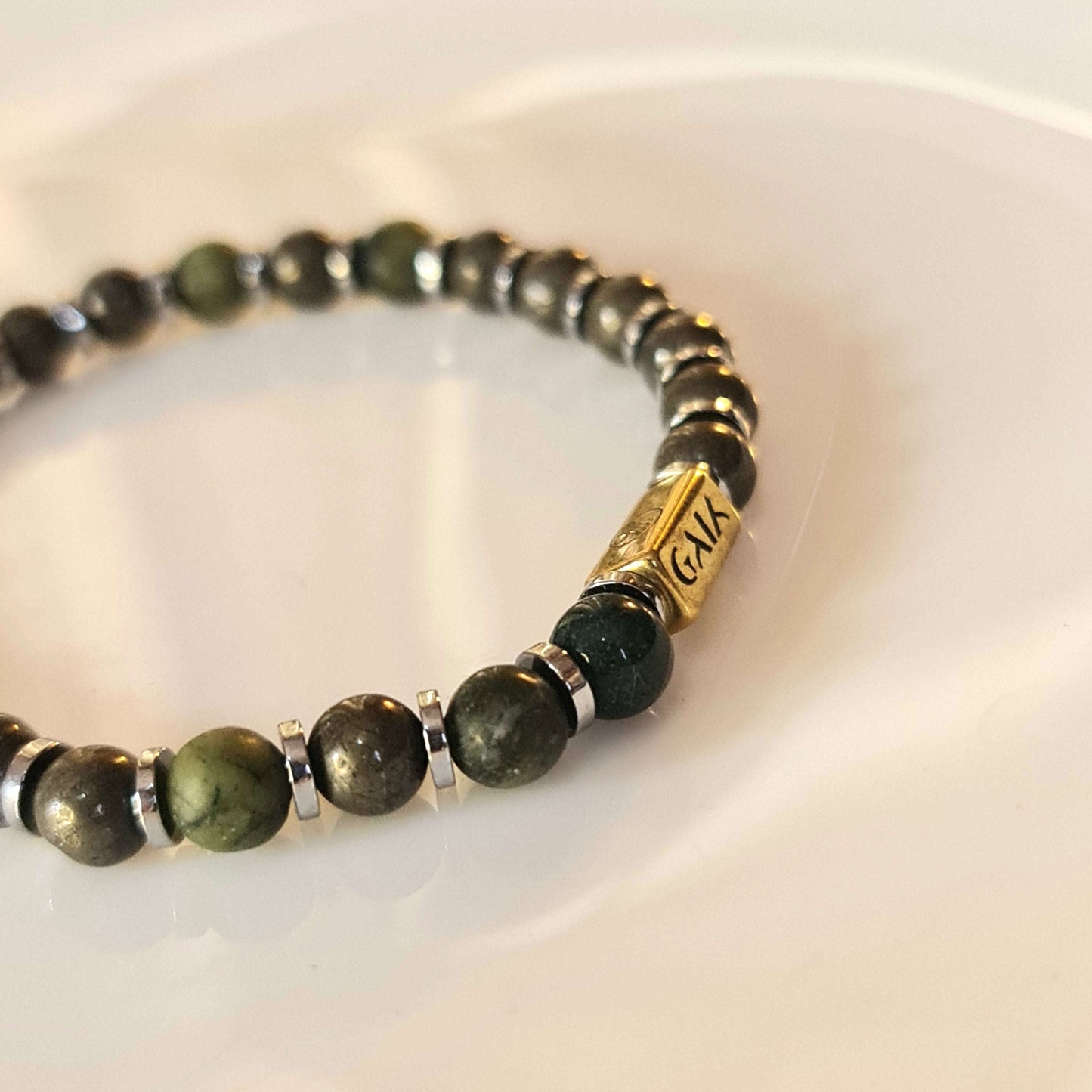
Iron & Moss Bracelet
Iron & Moss Bracelet
Hurry up! Only 1 item is in stock
Premium Stones
Globally Sourced
Handmade Jewellery
Unique Designs
Couldn't load pickup availability
Returns
Returns
If you're unhappy with your purchase, we'll find a solution for you. Most of our products can be returned within 7 days. Returns will be refunded to the original payment method or as a store credit. We do our best to make you comfortable, because let's face it, you're the best.
Jewelry Care Guide
Jewelry Care Guide
To keep your GAIA gold-plated jewelry shining and prevent natural color change (oxidation), follow these simple rules:
- Last On, First Off: Put your jewelry on after makeup, perfume, and lotion have dried. Take it off first when you get home.
- Keep It Dry: Always remove your pieces before showering, swimming, or intense workouts.
- Avoid Chemicals: Direct contact with harsh chemicals, perfumes, or saltwater can strip the gold layer and cause dullness.
- Store Safely: Keep your pieces in the GAIA airtight pouch or a jewelry box to protect them from moisture.
Gold in the stone. Green beneath it.
Pyrite and Moss Agate — two stones that look like they belong to the same landscape. The Pyrite carries a metallic gold-grey surface with natural markings; the Moss Agate runs dark green with dendrite patterns inside. Silver rondelles separate each stone, and a brass GAIA bar sits at the center. The combination is quiet and deliberate. Made once, for one person.
- Elements: Pyrite, Moss Agate, silver-plated rondelle spacers, brass GAIA bar charm, elastic core.
- Size: One size, elastic fit.
- Rarity: One piece.
- Associations: Leo (Pyrite) | Gemini (Moss Agate)
Express your natural beauty with GAIA pieces, handcrafted with care in Egypt.
Moss Agate was prized in the ancient world for what appeared to be trapped inside it. The stone’s internal dendrite patterns — dark formations that resemble moss, roots, and forest growth — made it one of the few gems that seemed to contain a landscape within itself. It was used in signet rings and decorative inlay precisely because no two stones carried the same interior. (Kunz, G.F., The Curious Lore of Precious Stones, J.B. Lippincott, 1913)