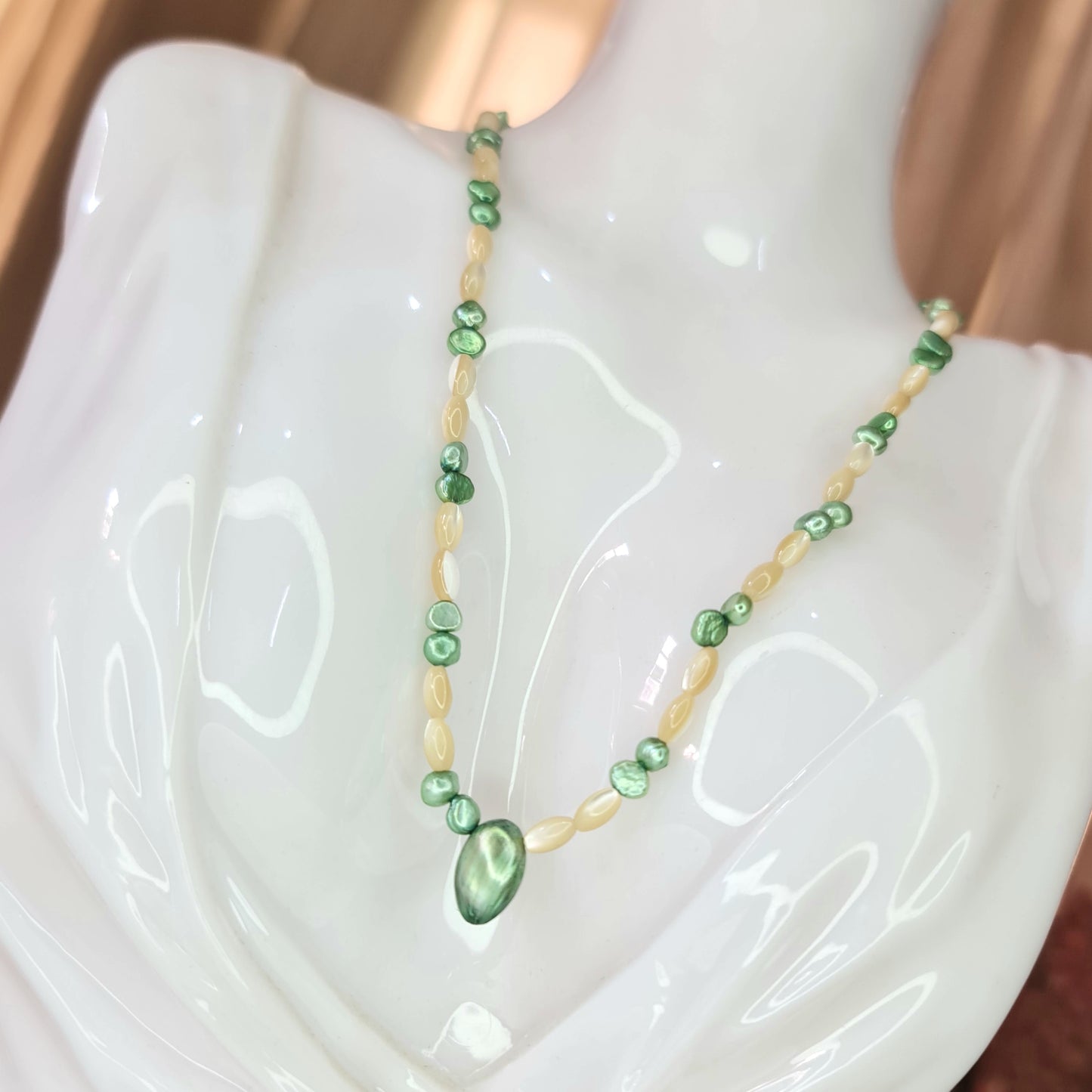
Green Pearl Necklace
Green Pearl Necklace
Hurry up! Only 1 item is in stock
Premium Stones
Globally Sourced
Handmade Jewellery
Unique Designs
Couldn't load pickup availability
Returns
Returns
If you're unhappy with your purchase, we'll find a solution for you. Most of our products can be returned within 7 days. Returns will be refunded to the original payment method or as a store credit. We do our best to make you comfortable, because let's face it, you're the best.
Jewelry Care Guide
Jewelry Care Guide
To keep your GAIA gold-plated jewelry shining and prevent natural color change (oxidation), follow these simple rules:
- Last On, First Off: Put your jewelry on after makeup, perfume, and lotion have dried. Take it off first when you get home.
- Keep It Dry: Always remove your pieces before showering, swimming, or intense workouts.
- Avoid Chemicals: Direct contact with harsh chemicals, perfumes, or saltwater can strip the gold layer and cause dullness.
- Store Safely: Keep your pieces in the GAIA airtight pouch or a jewelry box to protect them from moisture.
Green from the water. Cream from the same source.
Green keshi freshwater pearls and cream rice freshwater pearls alternate along a single strand, each one irregular in shape and surface — no two identical. At the center, a larger baroque green pearl hangs as a pendant, its form determined entirely by how it grew. The necklace closes at the back with a silver toggle clasp. Made once, for one person.
- Elements: Green keshi freshwater pearls, cream rice freshwater pearls, baroque green freshwater pearl pendant, silver toggle clasp.
- Size: One size.
- Rarity: One piece.
- Associations: Cancer (Pearl)
Express your natural beauty with GAIA pieces, handcrafted with care in Egypt.
Freshwater pearls have been harvested and traded for over four thousand years. Unlike saltwater pearls, which typically form around an implanted bead nucleus, freshwater pearls grow from tissue grafts alone — which means the pearl is composed almost entirely of nacre. The irregular shapes that result — keshi, baroque, rice — are not defects. They are the natural outcome of a process that cannot be fully controlled. Each pearl is the record of its own growth. (Kunz, G.F., The Curious Lore of Precious Stones, J.B. Lippincott, 1913)