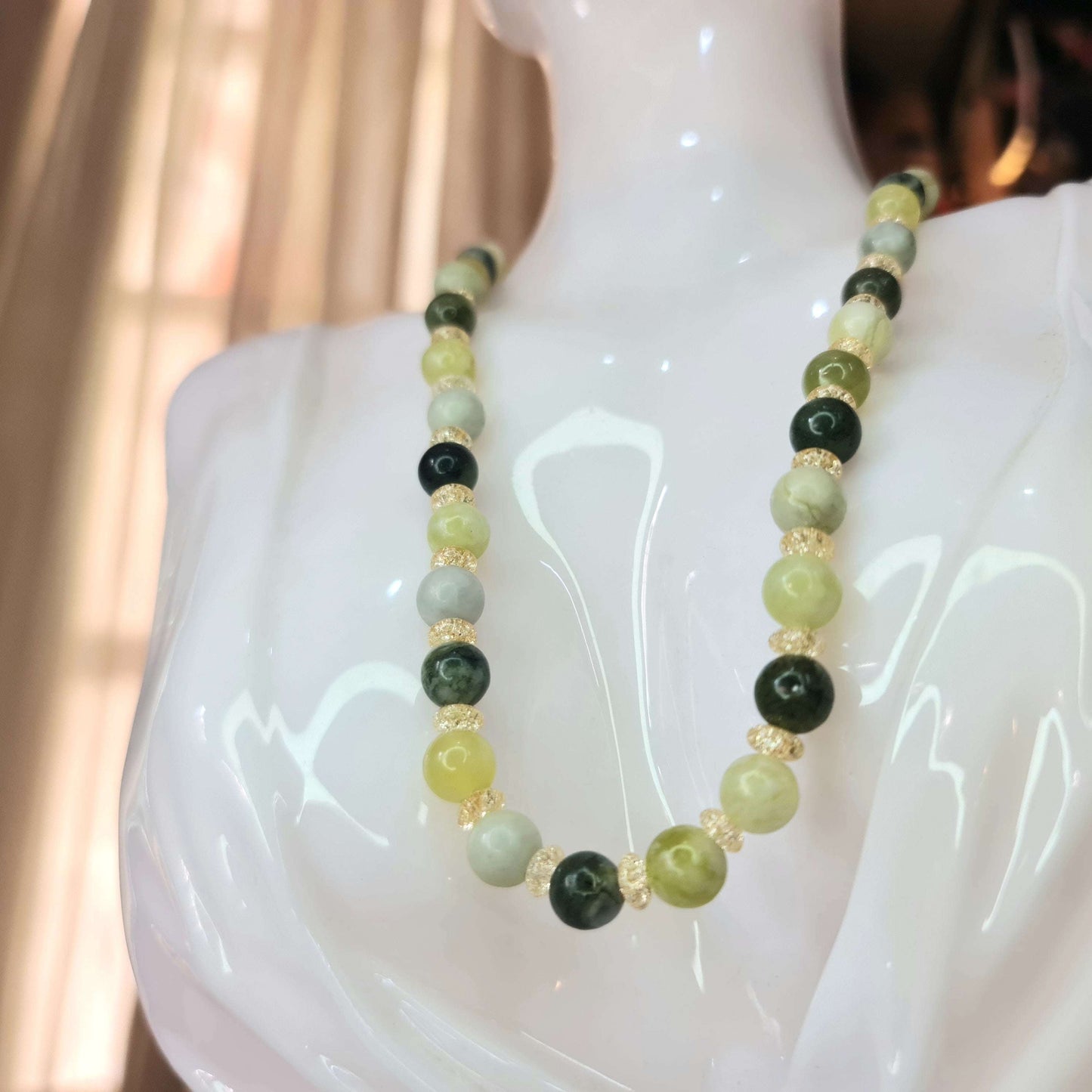
Forest Hamsa Necklace
Forest Hamsa Necklace
Hurry up! Only 1 item is in stock
Premium Stones
Globally Sourced
Handmade Jewellery
Unique Designs
Couldn't load pickup availability
Returns
Returns
If you're unhappy with your purchase, we'll find a solution for you. Most of our products can be returned within 7 days. Returns will be refunded to the original payment method or as a store credit. We do our best to make you comfortable, because let's face it, you're the best.
Jewelry Care Guide
Jewelry Care Guide
To keep your GAIA gold-plated jewelry shining and prevent natural color change (oxidation), follow these simple rules:
- Last On, First Off: Put your jewelry on after makeup, perfume, and lotion have dried. Take it off first when you get home.
- Keep It Dry: Always remove your pieces before showering, swimming, or intense workouts.
- Avoid Chemicals: Direct contact with harsh chemicals, perfumes, or saltwater can strip the gold layer and cause dullness.
- Store Safely: Keep your pieces in the GAIA airtight pouch or a jewelry box to protect them from moisture.
Three greens, one line.
Serpentine in pale yellow-green, Amazonite in soft grey-green, and Moss Agate in deep forest green alternate along a single strand, each stone a different shade and texture of the same color family. Gold-plated crystal rondelles sit between them as spacers, catching light without competing with the stones. The necklace closes at the back with a silver toggle clasp, a small Hamsa charm in cream shell hanging from the bar.
- Elements: Serpentine, Amazonite, Moss Agate, gold-plated crystal rondelles, silver toggle clasp with Hamsa shell charm.
- Size: Adjustable length.
- Rarity: One piece.
- Associations: Gemini (Serpentine, Moss Agate) | Virgo (Amazonite)
Express your natural beauty with GAIA pieces, handcrafted with care in Egypt.
The Hamsa — an open hand with an eye at its center — appears across the ancient Mediterranean and Middle East as one of the most persistent protective symbols in recorded history. It was documented in Phoenician, Jewish, and Islamic traditions under different names, each culture adapting the form while preserving its core meaning: a hand raised against harm. Its presence in Egyptian amulet traditions was noted by archaeologists excavating sites along the Nile delta, where hand-shaped pendants appeared in burial assemblages dating to the first millennium BCE. (Aldred, C., Jewels of the Pharaohs, Thames & Hudson, 1971)