Floating Pearl Earrings
Floating Pearl Earrings
Hurry up! Only 1 item is in stock
Premium Stones
Globally Sourced
Handmade Jewellery
Unique Designs
Couldn't load pickup availability
Returns
Returns
If you're unhappy with your purchase, we'll find a solution for you. Most of our products can be returned within 7 days. Returns will be refunded to the original payment method or as a store credit. We do our best to make you comfortable, because let's face it, you're the best.
Jewelry Care Guide
Jewelry Care Guide
To keep your GAIA gold-plated jewelry shining and prevent natural color change (oxidation), follow these simple rules:
- Last On, First Off: Put your jewelry on after makeup, perfume, and lotion have dried. Take it off first when you get home.
- Keep It Dry: Always remove your pieces before showering, swimming, or intense workouts.
- Avoid Chemicals: Direct contact with harsh chemicals, perfumes, or saltwater can strip the gold layer and cause dullness.
- Store Safely: Keep your pieces in the GAIA airtight pouch or a jewelry box to protect them from moisture.
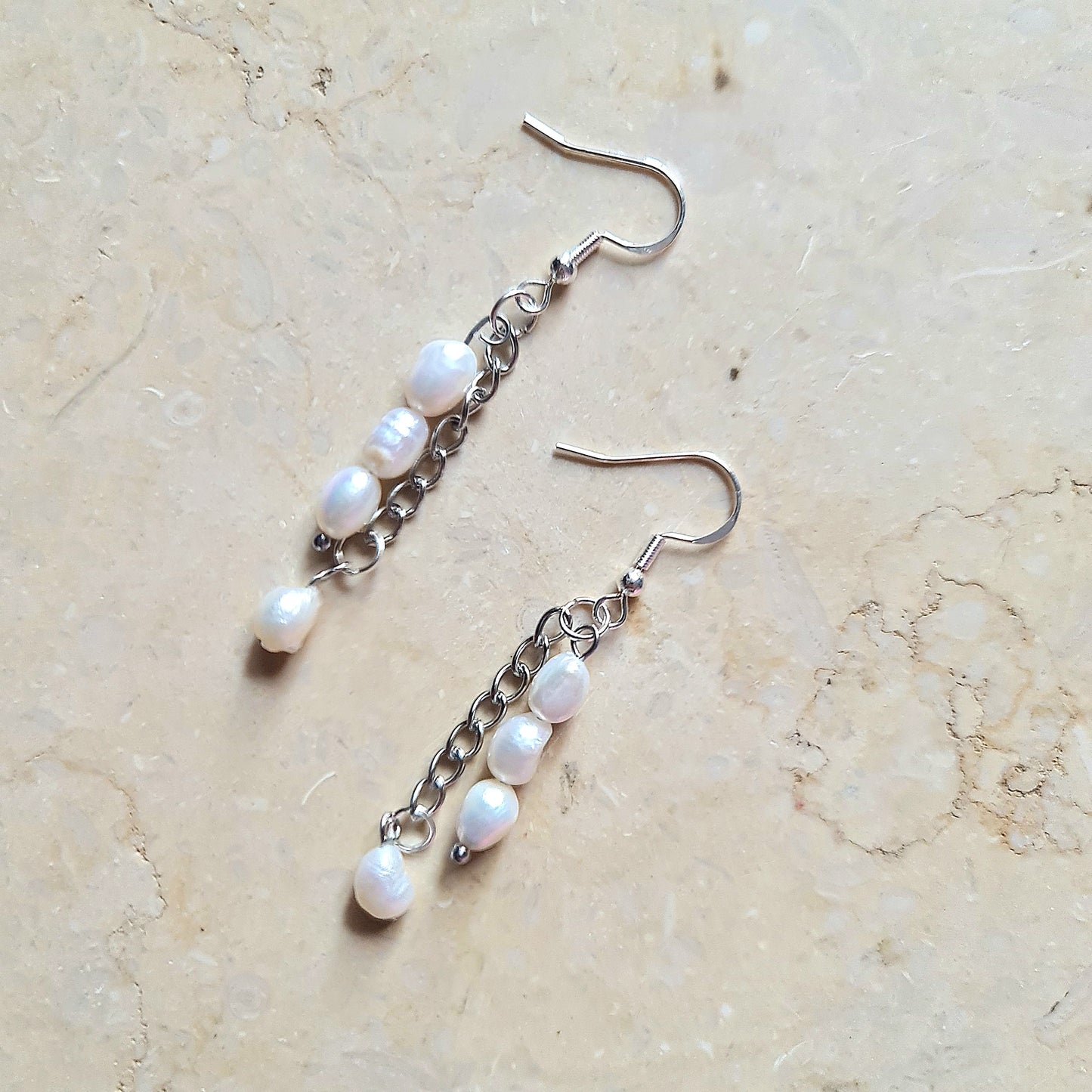
Each earring opens with a baroque freshwater pearl at the top — irregular, cream-white, iridescent — connected to a length of silver stainless steel curb chain that falls below it. A second baroque pearl closes the drop at the bottom. The chain between them is visible, structural, intentional. Long, lightweight, and easy to wear.
- Elements: Freshwater baroque pearls (Irregular), stainless steel curb chain, silver fish hook earwires
- Size: Long drop earrings
- Rarity: One piece.
- Associations: Cancer (Pearl)
Express your natural beauty with GAIA pieces, handcrafted with care in Egypt.
The pearl was the only gemstone made by a living creature — and for that reason alone, it commanded a price no other stone could match in the ancient world. Pliny the Elder placed it above all others, documenting how Roman women wore pearl jewelry as the ultimate display of wealth and refinement. Harvested from the Persian Gulf, the Red Sea, and the coasts of India, pearls moved through trade routes long before most gemstones were even named. (Pliny the Elder, Natural History, 77 AD)


Bundle deals