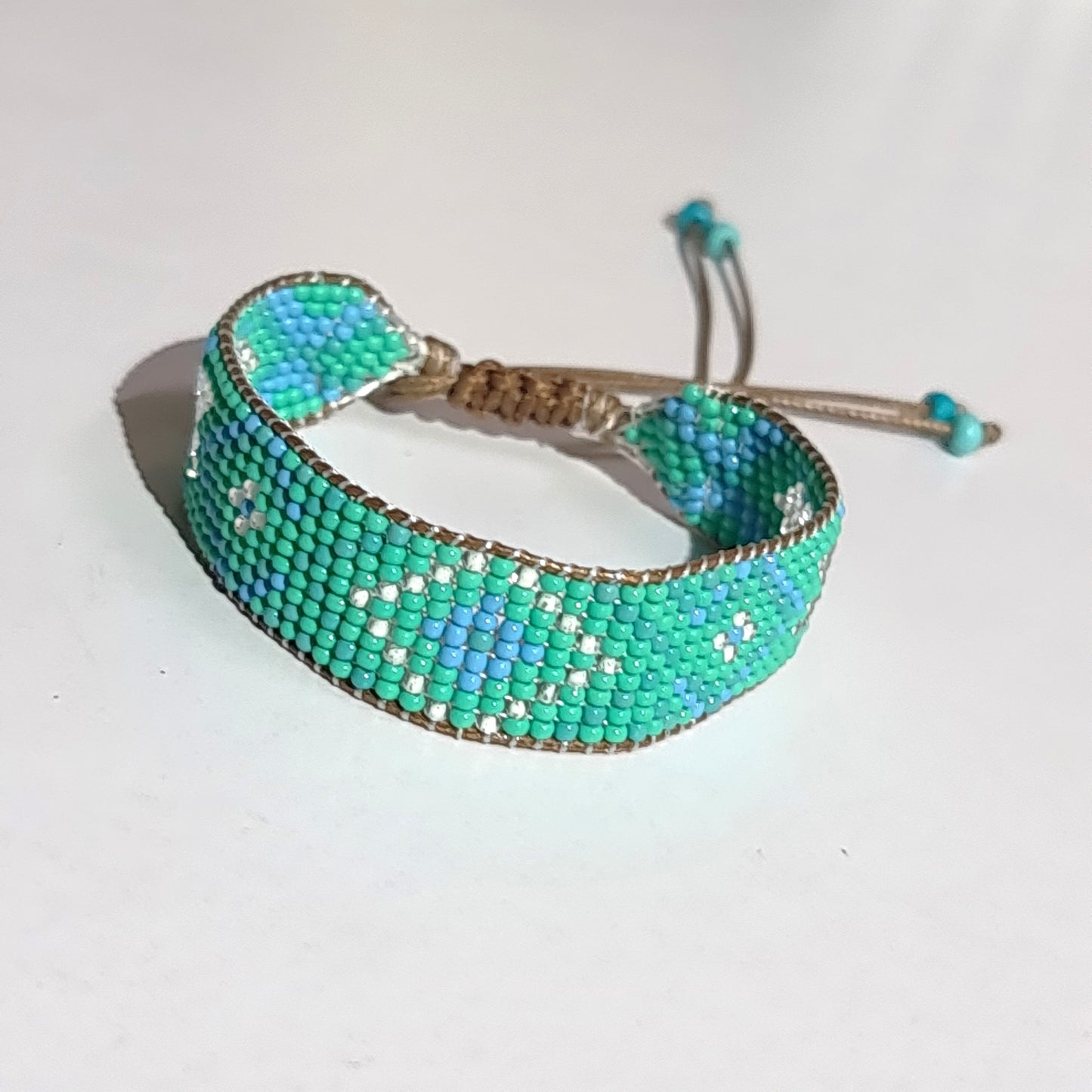
Chevron Bracelet
Chevron Bracelet
Hurry up! Only 1 item is in stock
Premium Stones
Globally Sourced
Handmade Jewellery
Unique Designs
Couldn't load pickup availability
Returns
Returns
If you're unhappy with your purchase, we'll find a solution for you. Most of our products can be returned within 7 days. Returns will be refunded to the original payment method or as a store credit. We do our best to make you comfortable, because let's face it, you're the best.
Jewelry Care Guide
Jewelry Care Guide
To keep your GAIA gold-plated jewelry shining and prevent natural color change (oxidation), follow these simple rules:
- Last On, First Off: Put your jewelry on after makeup, perfume, and lotion have dried. Take it off first when you get home.
- Keep It Dry: Always remove your pieces before showering, swimming, or intense workouts.
- Avoid Chemicals: Direct contact with harsh chemicals, perfumes, or saltwater can strip the gold layer and cause dullness.
- Store Safely: Keep your pieces in the GAIA airtight pouch or a jewelry box to protect them from moisture.
Midnight Waves
A meticulously hand-woven band of glass seed beads forms a rhythmic chevron pattern in deep navy, crisp white, and earthy brown. Secured by a dark braided cord with adjustable sliding closure and finished with refined bead accents, celebrating ancient beadwork artistry and the timeless elegance of celestial geometry.
- Elements: Glass seed beads (navy blue, white, brown), nylon braided cord
- Size: Adjustable slide-closure fit
- Rarity: Limited seasonal release
- Associations: Universal symbol of direction and cosmic flow
Express your natural beauty with GAIA pieces, handcrafted with care in Egypt.
Chevron patterns have adorned sacred artifacts across ancient civilizations, symbolizing the flow of water, the movement of celestial bodies, and the journey of the soul. The V-shaped motif represented direction, protection, and the eternal cycle of ascent and descent in cosmic harmony (Dubin, L.S., The History of Beads: From 100,000 B.C. to the Present, Thames & Hudson, 2009).



Bundle deals