Five Tones Bracelet
Five Tones Bracelet
Hurry up! Only 1 item is in stock
Premium Stones
Globally Sourced
Handmade Jewellery
Unique Designs
Couldn't load pickup availability
Returns
Returns
If you're unhappy with your purchase, we'll find a solution for you. Most of our products can be returned within 7 days. Returns will be refunded to the original payment method or as a store credit. We do our best to make you comfortable, because let's face it, you're the best.
Jewelry Care Guide
Jewelry Care Guide
To keep your GAIA gold-plated jewelry shining and prevent natural color change (oxidation), follow these simple rules:
- Last On, First Off: Put your jewelry on after makeup, perfume, and lotion have dried. Take it off first when you get home.
- Keep It Dry: Always remove your pieces before showering, swimming, or intense workouts.
- Avoid Chemicals: Direct contact with harsh chemicals, perfumes, or saltwater can strip the gold layer and cause dullness.
- Store Safely: Keep your pieces in the GAIA airtight pouch or a jewelry box to protect them from moisture.
Every soft color. One wrist. One person.
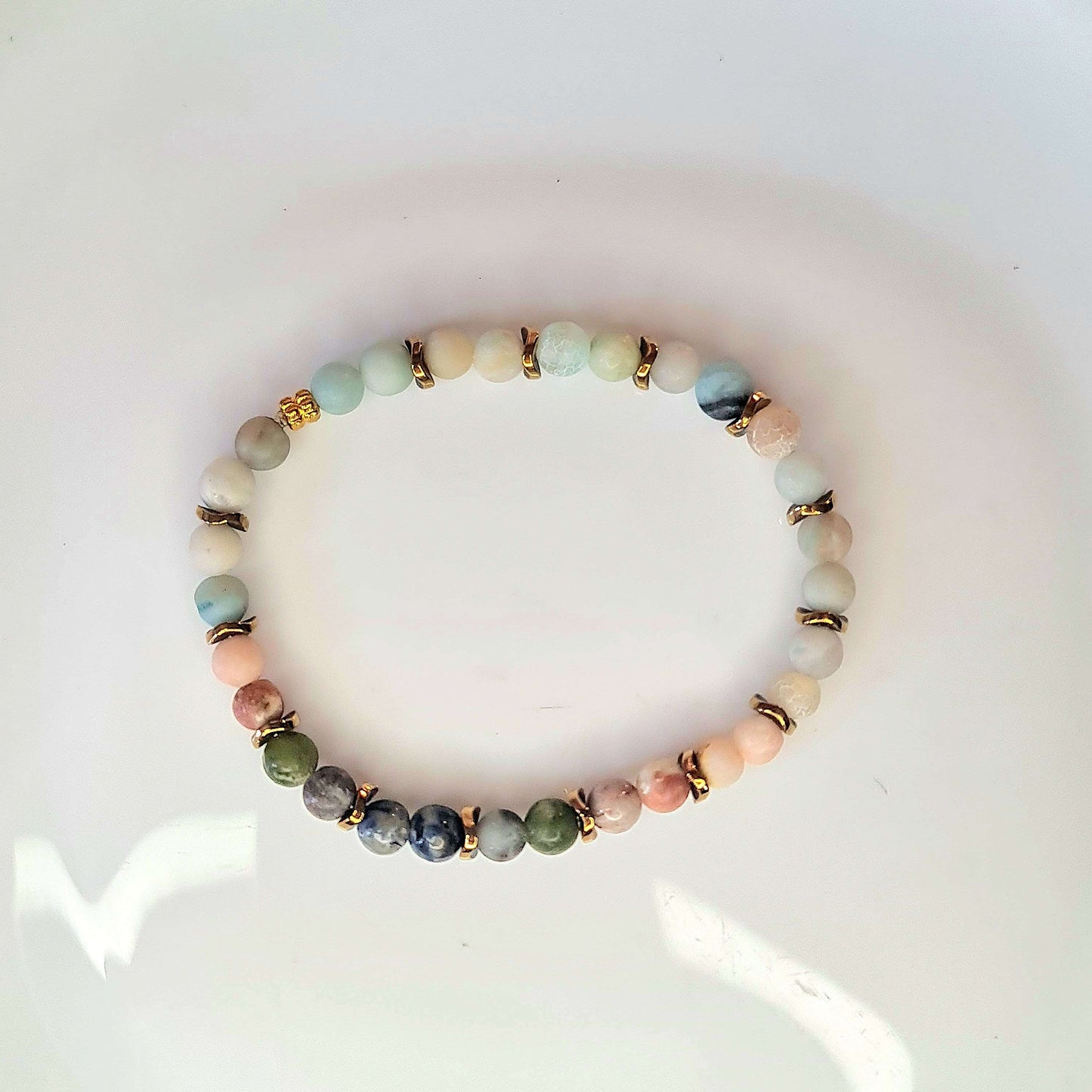
Amazonite in mint blue, Pink Opal in dusty rose, White Agate in cream, Sodalite in deep blue-grey, and Moss Agate in olive green — five stones, five different moods, gathered into a single bracelet that will not be made again. Gold-plated rondelle spacers run between each stone, with a CZ pavé bead marking the center. The combination is soft on the eye and specific in its arrangement. When it’s gone, it’s gone.
- Elements: Amazonite, Pink Opal, White Agate, Sodalite, Moss Agate, hematite spacers, CZ pavé rondelle, elastic core.
- Size: One size, elastic fit.
- Rarity: One piece.
- Associations: Cancer (White Agate) | Gemini (Moss Agate) | Virgo (Amazonite) | Sagittarius (Sodalite)
Express your natural beauty with GAIA pieces, handcrafted with care in Egypt.
Pink Opal has been mined in the Andes of Peru for centuries, where it was used by pre-Columbian cultures in decorative and ceremonial objects. It is one of the few opals that occurs in a consistent pastel pink tone without the play-of-color associated with precious opal, making it a distinct material in its own right. Peruvian Pink Opal was documented in early European mineralogical surveys of South American gem materials in the 18th century. (Wodiska, J., A Book of Precious Stones, G.P. Putnam’s Sons, 1909)



Bundle deals