Vegvisir Cord Bracelet
Vegvisir Cord Bracelet
Hurry up! Only 9 items are in stock.
Premium Stones
Globally Sourced
Handmade Jewellery
Unique Designs
Couldn't load pickup availability
Returns
Returns
If you're unhappy with your purchase, we'll find a solution for you. Most of our products can be returned within 7 days. Returns will be refunded to the original payment method or as a store credit. We do our best to make you comfortable, because let's face it, you're the best.
Jewelry Care Guide
Jewelry Care Guide
To keep your GAIA gold-plated jewelry shining and prevent natural color change (oxidation), follow these simple rules:
- Last On, First Off: Put your jewelry on after makeup, perfume, and lotion have dried. Take it off first when you get home.
- Keep It Dry: Always remove your pieces before showering, swimming, or intense workouts.
- Avoid Chemicals: Direct contact with harsh chemicals, perfumes, or saltwater can strip the gold layer and cause dullness.
- Store Safely: Keep your pieces in the GAIA airtight pouch or a jewelry box to protect them from moisture.
Northern Compass
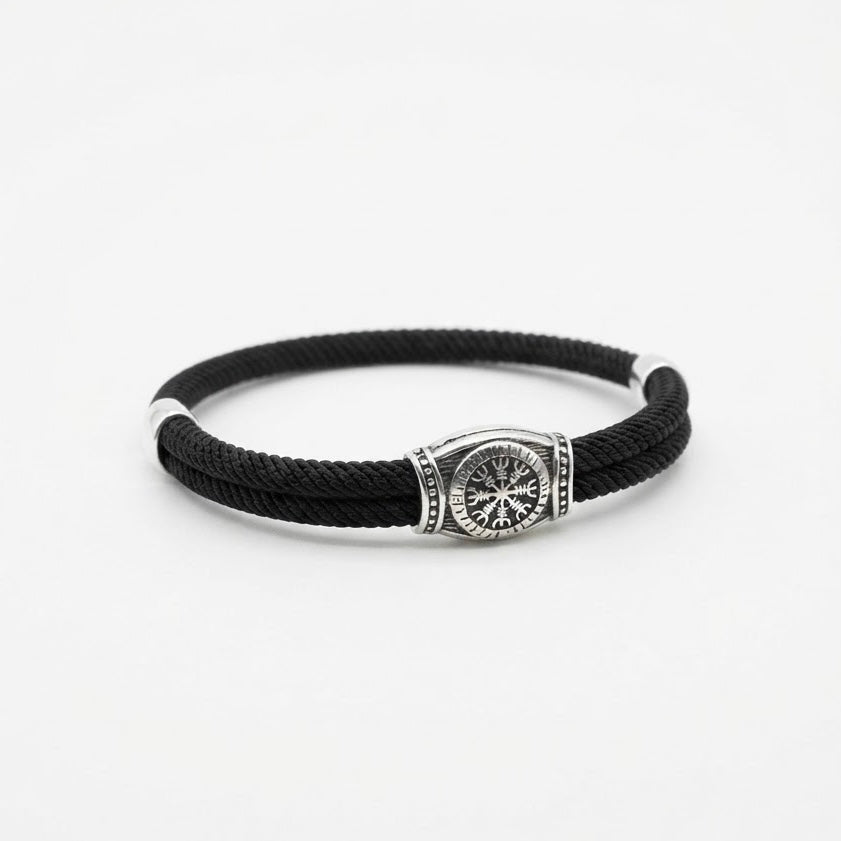
A tightly wound black nylon cord wraps the wrist in clean, unbroken texture, anchored at its center by a silver-plated Vegvisir medallion — the eight-pointed compass symbol recorded in Icelandic manuscripts of the seventeenth century as a guide through storms and uncertain terrain. Two silver-toned magnetic clasps close the piece with quiet precision. Available in black and red.
- Elements: (Black or Red) cord, silver-plated Vegvisir medallion, magnetic silver-toned clasps
- Size: Adjustable fit
- Rarity: Limited seasonal release
Express your natural beauty with GAIA pieces, handcrafted with care in Egypt.
The Vegvisir — meaning "wayfinder" in Old Norse — appears in the Huld Manuscript, an Icelandic collection of magical staves compiled in 1847 from older folk traditions. It was drawn or worn as a symbol of orientation: the belief that one who carries it will find their way through storms, known and unknown (Huld Manuscript, National Museum of Iceland, compiled 1847).



Bundle deals