Cordis Vigil Necklace
Cordis Vigil Necklace
Hurry up! Only 1 item is in stock
Premium Stones
Globally Sourced
Handmade Jewellery
Unique Designs
Couldn't load pickup availability
Returns
Returns
If you're unhappy with your purchase, we'll find a solution for you. Most of our products can be returned within 7 days. Returns will be refunded to the original payment method or as a store credit. We do our best to make you comfortable, because let's face it, you're the best.
Jewelry Care Guide
Jewelry Care Guide
To keep your GAIA gold-plated jewelry shining and prevent natural color change (oxidation), follow these simple rules:
- Last On, First Off: Put your jewelry on after makeup, perfume, and lotion have dried. Take it off first when you get home.
- Keep It Dry: Always remove your pieces before showering, swimming, or intense workouts.
- Avoid Chemicals: Direct contact with harsh chemicals, perfumes, or saltwater can strip the gold layer and cause dullness.
- Store Safely: Keep your pieces in the GAIA airtight pouch or a jewelry box to protect them from moisture.
The Heart That Watches
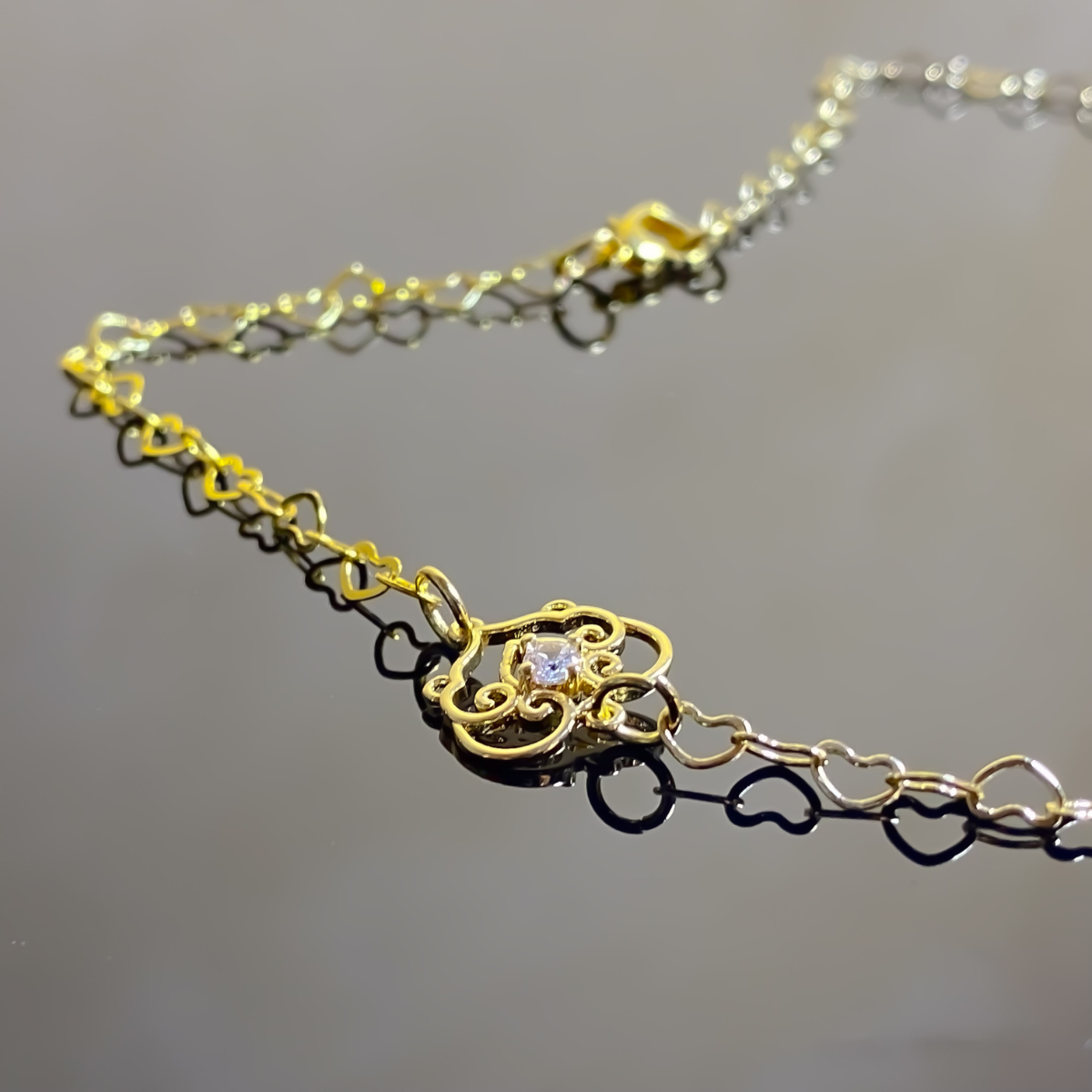
A gold heart-link chain — each link cast in the shape of a heart, the chain itself a repeated declaration — carries two pendants at opposite ends of its arc. A black enamel heart holds an evil eye at its center: the oldest symbol of watchful protection set inside the universal symbol of feeling. Across the chain, a gold filigree arabesque pendant frames a single CZ crystal with the precision of a manuscript illumination. Two charms. One continuous thought. One piece, for one person.
- Elements: Gold-plated stainless steel heart-link chain, black enamel eye heart pendant, gold filigree arabesque pendant, CZ crystal, lobster clasp with extension
- Rarity: One piece
Express your natural beauty with GAIA pieces, handcrafted with care in Egypt.
The eye — known as "nazar" in Turkish and "ayin harsha" in Arabic — appears in written protective amulet traditions as early as the 6th century BCE in Mesopotamian clay tablets. Its placement within a heart form is a modern convergence of two ancient instincts: the eye as guardian, the heart as the seat of intention. The pairing first appeared in Ottoman decorative arts of the 17th century, where protective symbols were routinely embedded within love tokens exchanged between families (Elworthy, F.T., The Evil Eye: The Origins and Practices of Superstition, John Murray, 1895).



Bundle deals