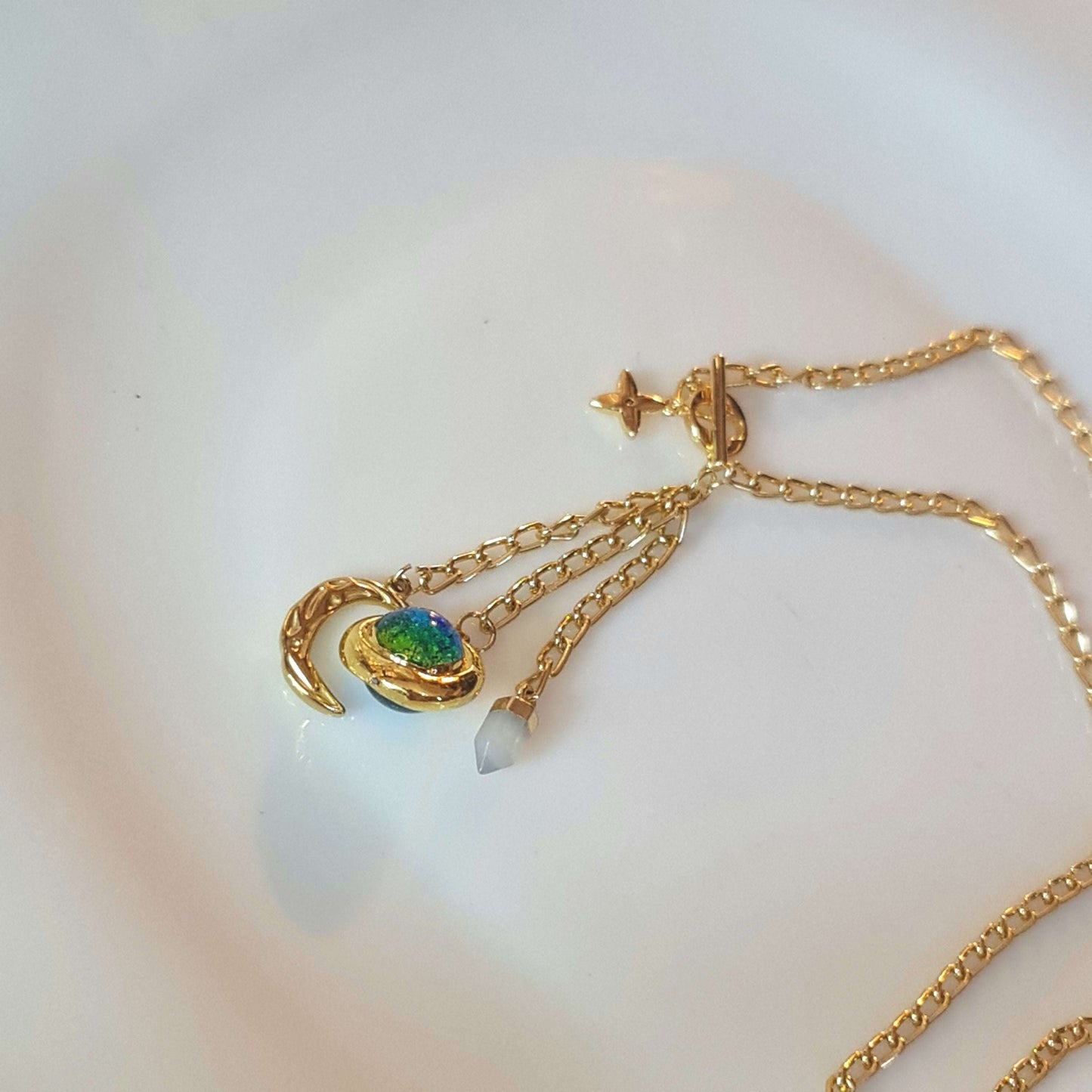
Crescent Toggle Necklace
Crescent Toggle Necklace
Hurry up! Only 1 item is in stock
Premium Stones
Globally Sourced
Handmade Jewellery
Unique Designs
Couldn't load pickup availability
Returns
Returns
If you're unhappy with your purchase, we'll find a solution for you. Most of our products can be returned within 7 days. Returns will be refunded to the original payment method or as a store credit. We do our best to make you comfortable, because let's face it, you're the best.
Jewelry Care Guide
Jewelry Care Guide
To keep your GAIA gold-plated jewelry shining and prevent natural color change (oxidation), follow these simple rules:
- Last On, First Off: Put your jewelry on after makeup, perfume, and lotion have dried. Take it off first when you get home.
- Keep It Dry: Always remove your pieces before showering, swimming, or intense workouts.
- Avoid Chemicals: Direct contact with harsh chemicals, perfumes, or saltwater can strip the gold layer and cause dullness.
- Store Safely: Keep your pieces in the GAIA airtight pouch or a jewelry box to protect them from moisture.
Gold, layered and locked.
A gold-plated figaro chain splits into three lighter chains mid-way, each falling at a different length and weight. The trio converges at a crescent moon pendant with an iridescent resin cabochon and a small resin point drop. The necklace closes with a toggle bar clasp, a four-petal flower charm sitting at the front of the neck as part of the look.
- Elements: Gold-plated stainless steel chains, crescent moon pendant, iridescent resin cabochon, resin point drop, toggle clasp with flower charm.
- Size: Adjustable length.
- Rarity: One piece.
Express your natural beauty with GAIA pieces, handcrafted with care in Egypt.
The crescent moon has appeared as a jewelry motif across nearly every ancient civilization — from Mesopotamian cylinder seals to Roman lunula amulets worn by children and women for protection. In ancient Rome, the lunula was one of the most widely documented protective ornaments, worn at the neck and recorded in detail by Roman writers as a symbol tied to Diana, goddess of the moon. (Kunz, G.F., The Curious Lore of Precious Stones, J.B. Lippincott, 1913)



Bundle deals