Sparkling Ventura Earrings
Sparkling Ventura Earrings
Hurry up! Only 1 item is in stock
Premium Stones
Globally Sourced
Handmade Jewellery
Unique Designs
Couldn't load pickup availability
Returns
Returns
If you're unhappy with your purchase, we'll find a solution for you. Most of our products can be returned within 7 days. Returns will be refunded to the original payment method or as a store credit. We do our best to make you comfortable, because let's face it, you're the best.
Jewelry Care Guide
Jewelry Care Guide
To keep your GAIA gold-plated jewelry shining and prevent natural color change (oxidation), follow these simple rules:
- Last On, First Off: Put your jewelry on after makeup, perfume, and lotion have dried. Take it off first when you get home.
- Keep It Dry: Always remove your pieces before showering, swimming, or intense workouts.
- Avoid Chemicals: Direct contact with harsh chemicals, perfumes, or saltwater can strip the gold layer and cause dullness.
- Store Safely: Keep your pieces in the GAIA airtight pouch or a jewelry box to protect them from moisture.
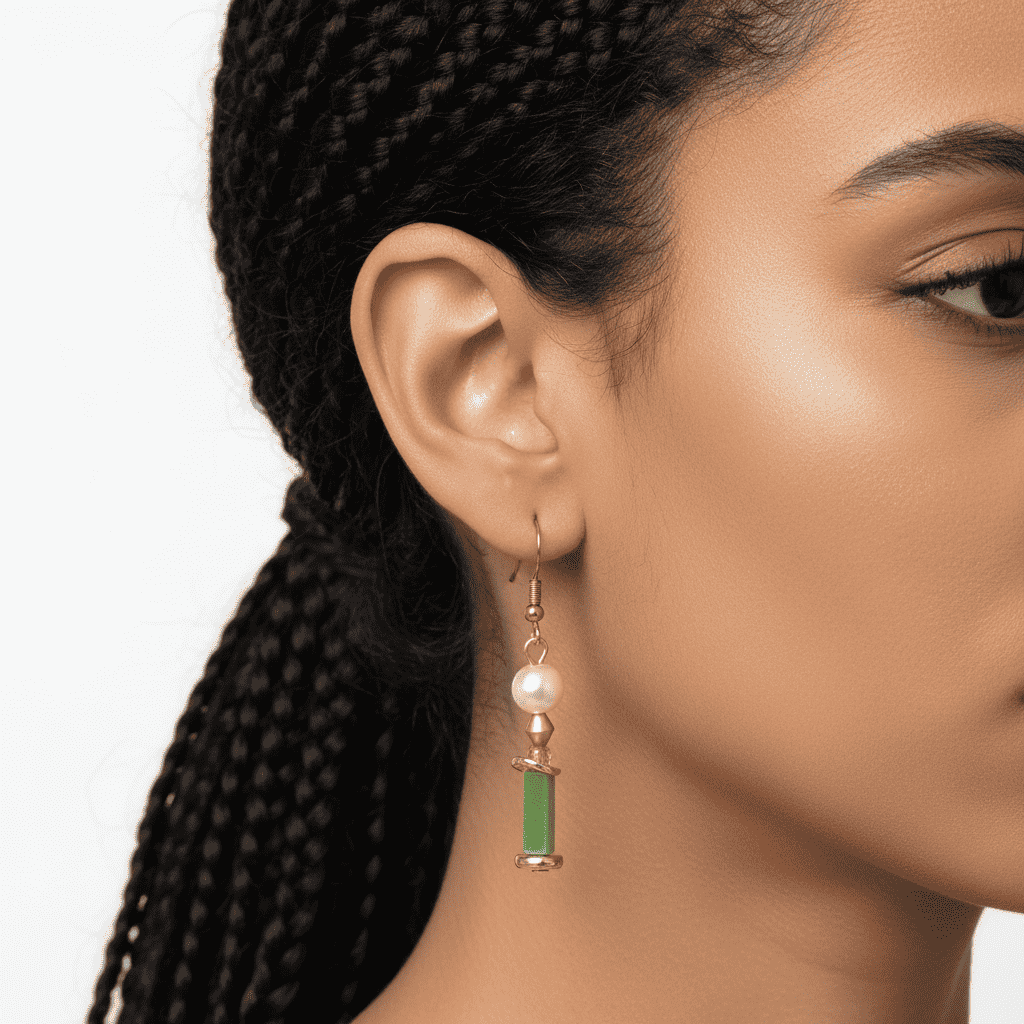
Soft green, gold-held.
A glass pearl sits at the top — round, white, quietly luminous. Below it, a green glass crystal tube, capped at both ends with detailed gold fittings: one floral, one heart-shaped. The hook is gold-plated stainless steel. The whole earring reads as a considered sequence — each element chosen, each transition deliberate.
- Elements: Green glass crystal tube, glass pearl, gold-plated floral and heart caps, gold-plated stainless steel hooks.
- Size: Drop earrings, lightweight.
- Rarity: Limited seasonal release.
Express your natural beauty with GAIA pieces, handcrafted with care in Egypt.
In medieval European lapidary tradition, green was consistently associated with renewal and the natural world — a belief documented across Arabic, Persian, and Latin texts from the 9th to 15th centuries. Al-Kindi wrote that green stones were worn to invite growth and ward off stagnation, a view echoed in later Western herbalism and gem lore. The color itself carried the meaning, regardless of the material it appeared in. (Al-Kindi, Kitāb fī Khawāṣṣ al-Ahjār, 9th century CE)



Bundle deals