Aventurine Pop Earrings
Aventurine Pop Earrings
Hurry up! Only 1 item is in stock
Premium Stones
Globally Sourced
Handmade Jewellery
Unique Designs
Couldn't load pickup availability
Returns
Returns
If you're unhappy with your purchase, we'll find a solution for you. Most of our products can be returned within 7 days. Returns will be refunded to the original payment method or as a store credit. We do our best to make you comfortable, because let's face it, you're the best.
Jewelry Care Guide
Jewelry Care Guide
To keep your GAIA gold-plated jewelry shining and prevent natural color change (oxidation), follow these simple rules:
- Last On, First Off: Put your jewelry on after makeup, perfume, and lotion have dried. Take it off first when you get home.
- Keep It Dry: Always remove your pieces before showering, swimming, or intense workouts.
- Avoid Chemicals: Direct contact with harsh chemicals, perfumes, or saltwater can strip the gold layer and cause dullness.
- Store Safely: Keep your pieces in the GAIA airtight pouch or a jewelry box to protect them from moisture.
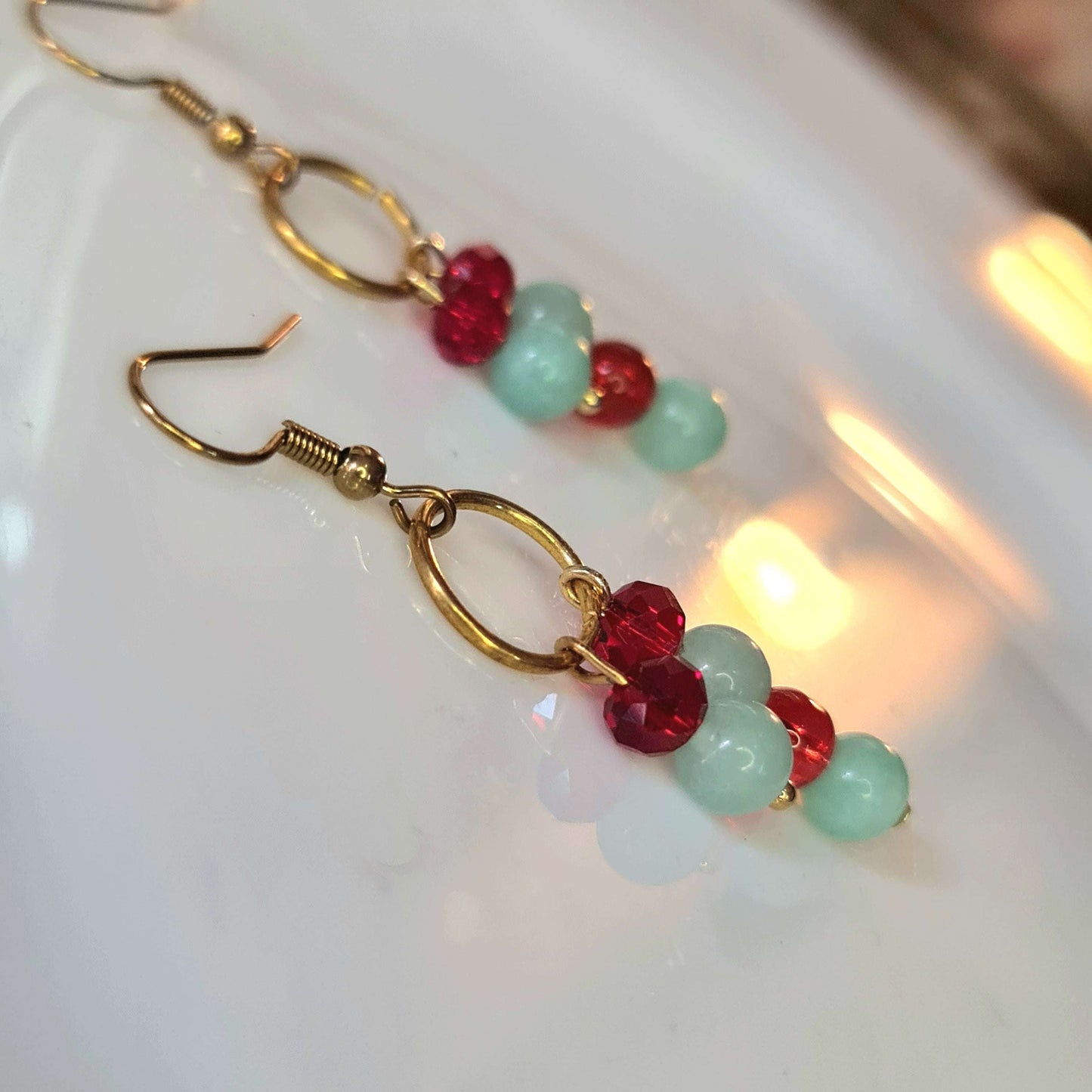
Mint and red, looped in gold.
A gold-plated loop hangs from each hook, and from it drops a short cluster of alternating beads — Green Aventurine in soft mint green and faceted red glass crystal rondelles that catch light sharply against the matte stone. The contrast between the two is direct: one opaque and cool, the other transparent and warm.
- Elements: Green Aventurine, faceted red glass crystal rondelles, gold-plated loop and hook.
- Size: Drop length approx. 4cm.
- Rarity: Limited seasonal release.
- Associations: Virgo, Libra (Aventurine)
Express your natural beauty with GAIA pieces, handcrafted with care in Egypt.
Medieval Arab astrologers associated green stones with Venus — the planet linked to Libra in classical astrological tradition. This correspondence between planetary color and stone was a central principle in Arab lapidary science, where stones were selected for talismans based on their alignment with specific planets and signs. (Al-Kindi, Kitāb fī Khawāṣṣ al-Ahjār, 9th century CE)



Bundle deals