Hessonite Garnet & Pearl Necklace
Hessonite Garnet & Pearl Necklace
Hurry up! Only 1 item is in stock
Premium Stones
Globally Sourced
Handmade Jewellery
Unique Designs
Couldn't load pickup availability
Returns
Returns
If you're unhappy with your purchase, we'll find a solution for you. Most of our products can be returned within 7 days. Returns will be refunded to the original payment method or as a store credit. We do our best to make you comfortable, because let's face it, you're the best.
Jewelry Care Guide
Jewelry Care Guide
To keep your GAIA gold-plated jewelry shining and prevent natural color change (oxidation), follow these simple rules:
- Last On, First Off: Put your jewelry on after makeup, perfume, and lotion have dried. Take it off first when you get home.
- Keep It Dry: Always remove your pieces before showering, swimming, or intense workouts.
- Avoid Chemicals: Direct contact with harsh chemicals, perfumes, or saltwater can strip the gold layer and cause dullness.
- Store Safely: Keep your pieces in the GAIA airtight pouch or a jewelry box to protect them from moisture.
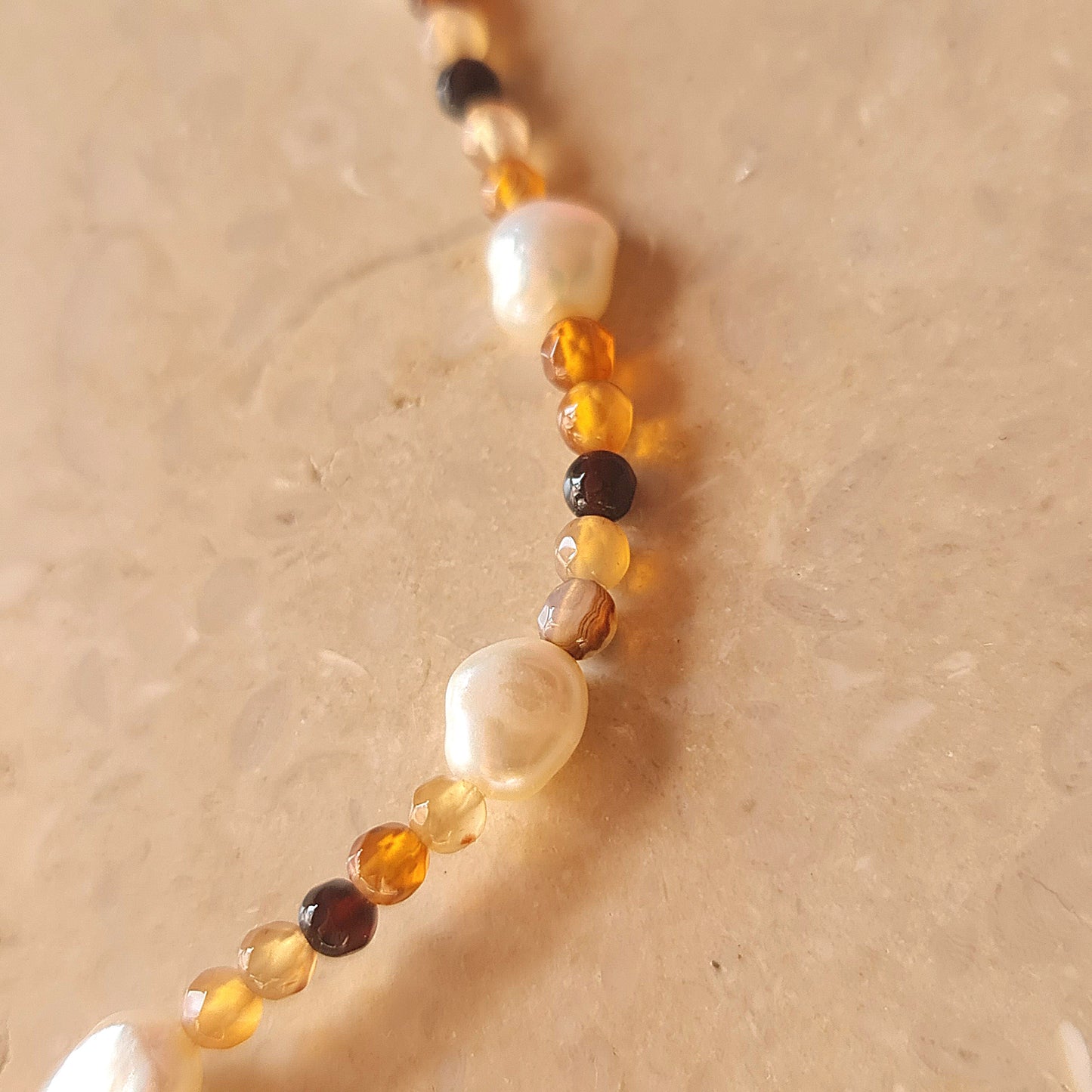
Hessonite Garnet beads in shifting tones of honey, amber, and deep rust — faceted to catch the light at every angle — broken at intervals by oval freshwater pearls in soft cream. The contrast is unhurried: translucent warmth against quiet iridescence, alternating across the full length of the strand. A gold T-bar toggle clasp closes the piece with the same quiet confidence it carries.
- Elements: Hessonite Garnet (faceted round beads, honey-amber tones), freshwater pearls (oval), gold-plated T-bar toggle clasp
- Size: Full beaded strand, collarbone to chest length
- Rarity: One piece.
- Associations: Aries, Capricorn (Garnet) | Cancer (Pearl)
Express your natural beauty with GAIA pieces, handcrafted with care in Egypt.
Garnet was among the most prized gemstones of the ancient world. Egyptian pharaohs were adored the garnet necklaces as symbols of life and protection — the stone appears across dynastic jewelry records as one of the earliest gems to be faceted and traded. Roman signet rings were frequently carved from garnet, and medieval lapidary texts document its use across Europe and the Arab world as a stone of warmth, vitality, and enduring presence. (Kunz, G.F., The Curious Lore of Precious Stones, 1913)



Bundle deals